
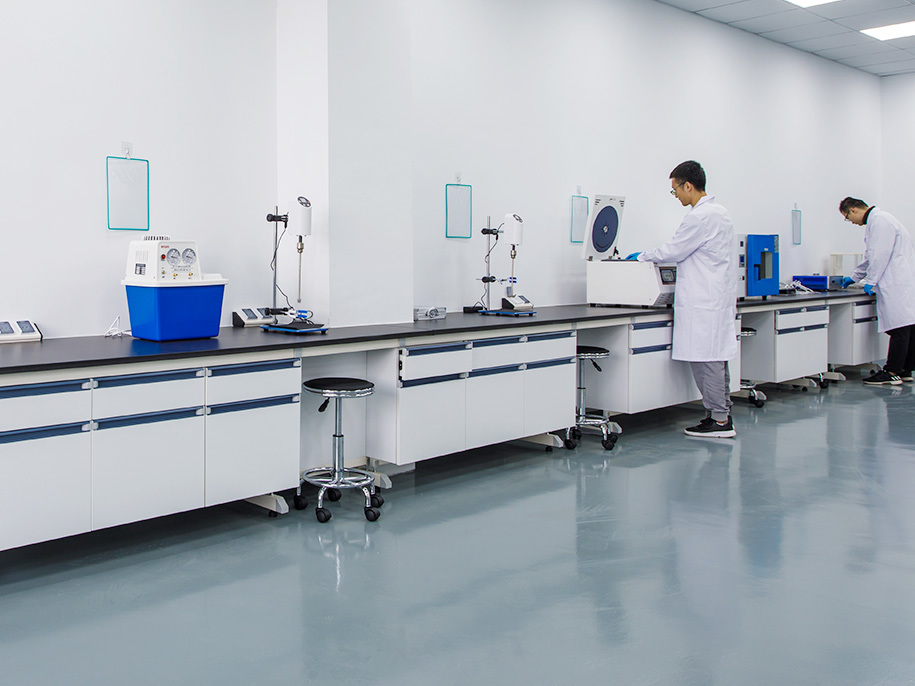
How Pilot Manufacturing Accelerates Advanced Material Commercialization
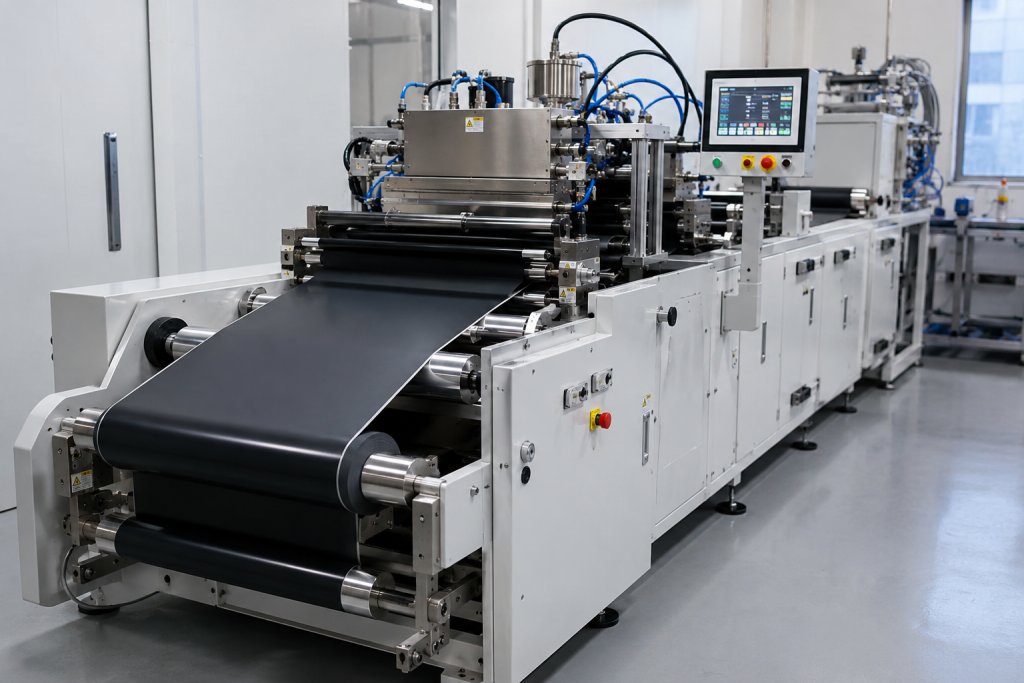
Every year, thousands of advanced materials are developed in research laboratories around the world. Many demonstrate impressive properties, including higher conductivity, improved thermal performance, enhanced mechanical strength, or superior chemical resistance.
However, only a small percentage successfully reach commercial markets.
The challenge is rarely the material itself.
Instead, the greatest obstacle often lies in the transition from laboratory innovation to industrial production.
This transition is where pilot manufacturing plays a critical role.
Pilot manufacturing provides the bridge between research and commercialization by validating materials, processes, equipment, and production strategies under realistic manufacturing conditions.
For advanced materials such as graphene, carbon nanotubes (CNTs), battery materials, conductive coatings, and thermal management products, pilot-scale validation has become an essential step toward successful industrial adoption.
The Commercialization Gap
Many material innovations begin with promising laboratory results.
Researchers may demonstrate:
- Improved conductivity
- Higher thermal conductivity
- Better energy storage performance
- Enhanced corrosion resistance
- Superior mechanical properties
While these results are important, laboratory success does not automatically guarantee manufacturing success.
Questions remain:
- Can the material be produced consistently?
- Can quality be maintained at larger volumes?
- Can manufacturing costs remain competitive?
- Will customers accept the product?
- Can the process be scaled efficiently?
The gap between laboratory performance and industrial production is often referred to as the commercialization gap.
Pilot manufacturing helps close this gap.
What Is Pilot Manufacturing?
Pilot manufacturing is the intermediate stage between laboratory development and full-scale production.
Pilot facilities typically use equipment and processes that closely resemble commercial manufacturing systems while operating at smaller production volumes.
Pilot lines may include:
- Slurry preparation systems
- Mixing equipment
- Coating lines
- Drying systems
- Calendering equipment
- Quality control systems
The objective is not simply to produce samples but to validate the entire manufacturing process.
Why Pilot Manufacturing Matters
Without pilot validation, companies often move directly from laboratory development to large-scale investment.
This approach creates significant risks.
Potential challenges include:
- Process instability
- Product inconsistency
- Equipment incompatibility
- Unexpected manufacturing costs
- Low production yields
Pilot manufacturing allows companies to identify and solve these problems before major capital investments are made.
Validating Material Performance at Scale
Many advanced materials behave differently during industrial processing than they do in laboratory testing.
Factors that change during scale-up include:
Batch Size
Large production batches may affect material distribution and consistency.
Process Conditions
Mixing, coating, and drying environments differ significantly from laboratory settings.
Equipment Interactions
Materials must perform reliably within industrial equipment.
Production Duration
Long production runs reveal stability issues that may not appear during short laboratory experiments.
Pilot testing helps determine whether material performance can be maintained under realistic manufacturing conditions.
Supporting Graphene Commercialization
Graphene provides an excellent example of why pilot manufacturing is important.
Many graphene projects demonstrate impressive laboratory performance.
However, commercialization often depends on solving manufacturing challenges such as:
- Dispersion consistency
- Agglomeration control
- Coating uniformity
- Batch-to-batch repeatability
Pilot manufacturing enables engineers to optimize these factors before commercial launch.
As a result, pilot validation frequently determines whether graphene technologies succeed in the marketplace.
Supporting CNT and Conductive Network Development
Carbon nanotubes are increasingly used to improve conductivity in batteries, coatings, and electronic materials.
However, CNT performance depends heavily on network formation and dispersion quality.
Pilot-scale testing helps evaluate:
- Large-scale dispersion processes
- Slurry stability
- Coating behavior
- Conductive network consistency
Without pilot validation, laboratory performance may be difficult to reproduce during production.
Pilot Manufacturing for Battery Materials
Battery manufacturing represents one of the most demanding commercialization environments.
Electrode materials must satisfy both performance and manufacturing requirements.
Pilot lines help evaluate:
Slurry Processability
Can the formulation be mixed, pumped, and coated consistently?
Coating Quality
Can uniform electrodes be produced continuously?
Drying Performance
Does the electrode maintain desired structure and adhesion?
Scale-Up Readiness
Can production parameters be transferred to commercial equipment?
Pilot validation is often a critical milestone before customer qualification and commercial deployment.
Reducing Technical Risk
One of the primary benefits of pilot manufacturing is risk reduction.
Pilot testing identifies issues before they become expensive production problems.
Examples include:
- Coating defects
- Material segregation
- Drying inconsistencies
- Equipment limitations
- Process variability
By addressing these challenges early, companies can significantly improve commercialization success rates.
Improving Manufacturing Economics
Commercial success depends not only on technical performance but also on economic viability.
Pilot manufacturing provides valuable data regarding:
- Material utilization
- Production efficiency
- Yield rates
- Energy consumption
- Process costs
This information helps companies make informed investment decisions and improve competitiveness.
Supporting Customer Qualification
Industrial customers increasingly require evidence that new materials can be manufactured reliably.
Pilot production provides:
- Representative product samples
- Manufacturing data
- Process validation records
- Performance consistency data
These resources often play a critical role during customer evaluation and qualification programs.
Enabling Faster Time-to-Market
Commercialization delays can significantly reduce competitive advantages.
Pilot manufacturing accelerates development by:
- Identifying scale-up issues early
- Reducing development uncertainty
- Supporting customer testing
- Improving manufacturing readiness
Companies that invest in pilot validation often reach the market more efficiently than those relying solely on laboratory development.
Common Technologies Used in Pilot Manufacturing
Advanced material pilot facilities often support:
Slot-Die Coating
Widely used for battery electrodes and functional coatings.
Roll-to-Roll Processing
Supporting continuous production environments.
Slurry Development
Optimizing material formulations and dispersion quality.
Drying and Solvent Management
Evaluating industrial process conditions.
Material Characterization
Verifying quality and performance throughout development.
These capabilities provide a realistic platform for commercialization studies.
Future Trends
Several industry trends are increasing demand for pilot manufacturing services.
Advanced Carbon Materials
Growing interest in graphene and CNT technologies.
Energy Storage Expansion
Rapid growth in battery manufacturing worldwide.
Functional Coatings
Increasing adoption of conductive, thermal, and protective coatings.
Sustainable Manufacturing
Demand for more efficient production processes.
As advanced materials become more complex, pilot manufacturing will play an even greater role in commercialization strategies.
The journey from laboratory discovery to commercial success is rarely straightforward.
Many advanced materials fail not because they lack performance, but because they cannot be manufactured consistently, economically, or at scale.
Pilot manufacturing addresses this challenge by providing a practical bridge between research and industrial production.
Through process validation, scale-up testing, quality optimization, and risk reduction, pilot manufacturing helps transform promising technologies into commercially viable products.
For graphene, CNTs, battery materials, functional coatings, and other advanced material systems, pilot-scale validation is often one of the most important steps on the path to successful commercialization.