Our Blogs
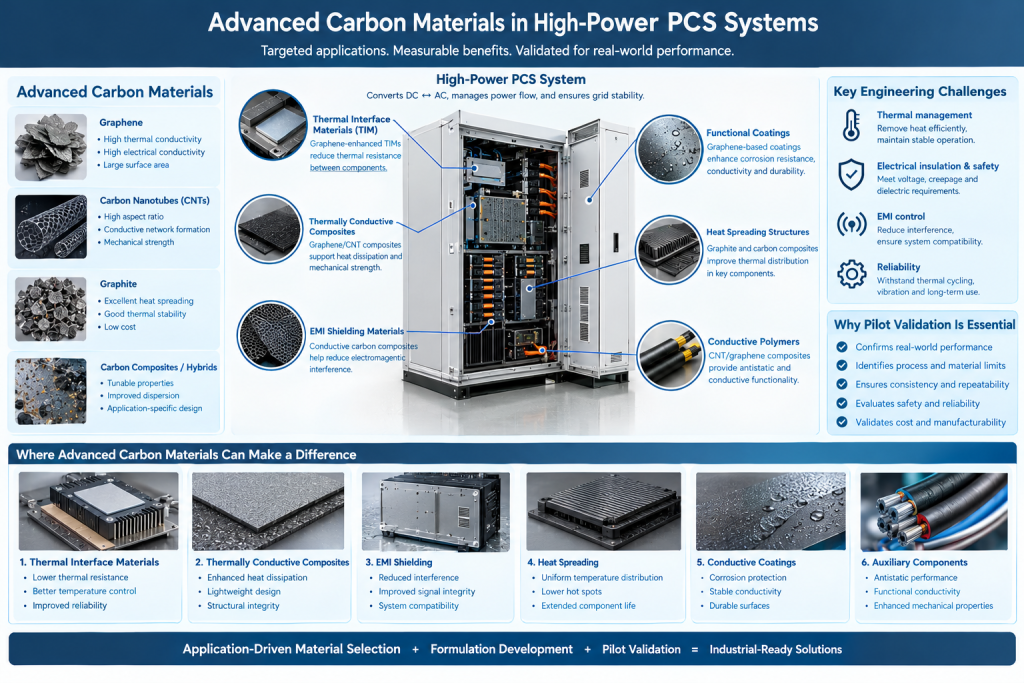
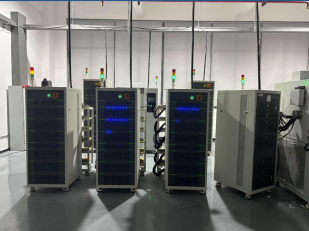
Advanced Carbon Materials in High-Power PCS Systems
Advanced Carbon Materials in High-Power PCS Systems Power Conversion Systems (PCS) are essential components in modern battery energy storage systems. ...
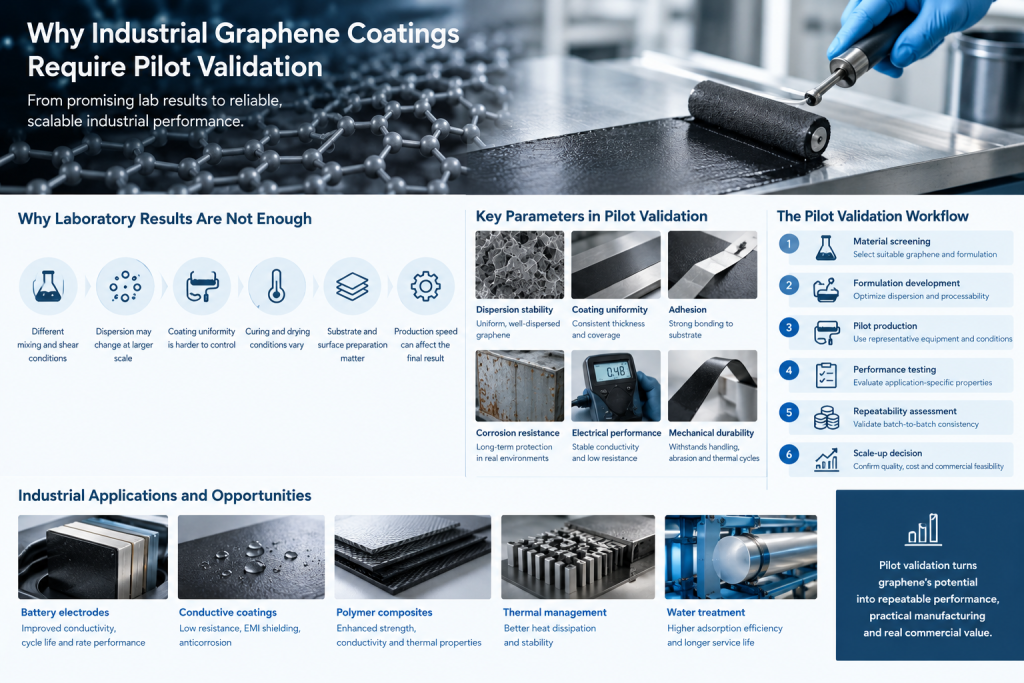
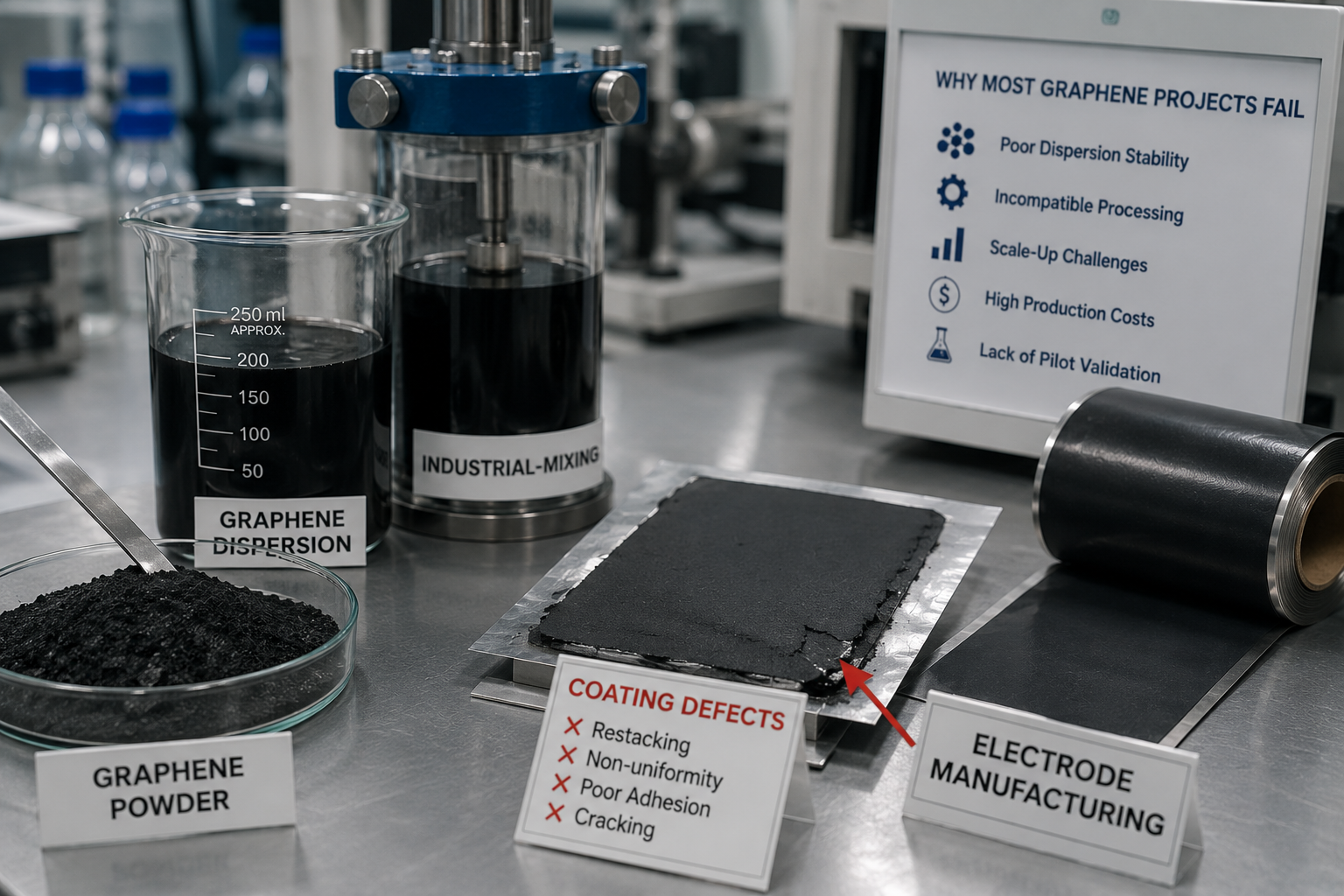
Why Industrial Graphene Coatings Require Pilot Validation
Why Industrial Graphene Coatings Require Pilot Validation Graphene has attracted significant interest in industrial coatings because of its potential ...
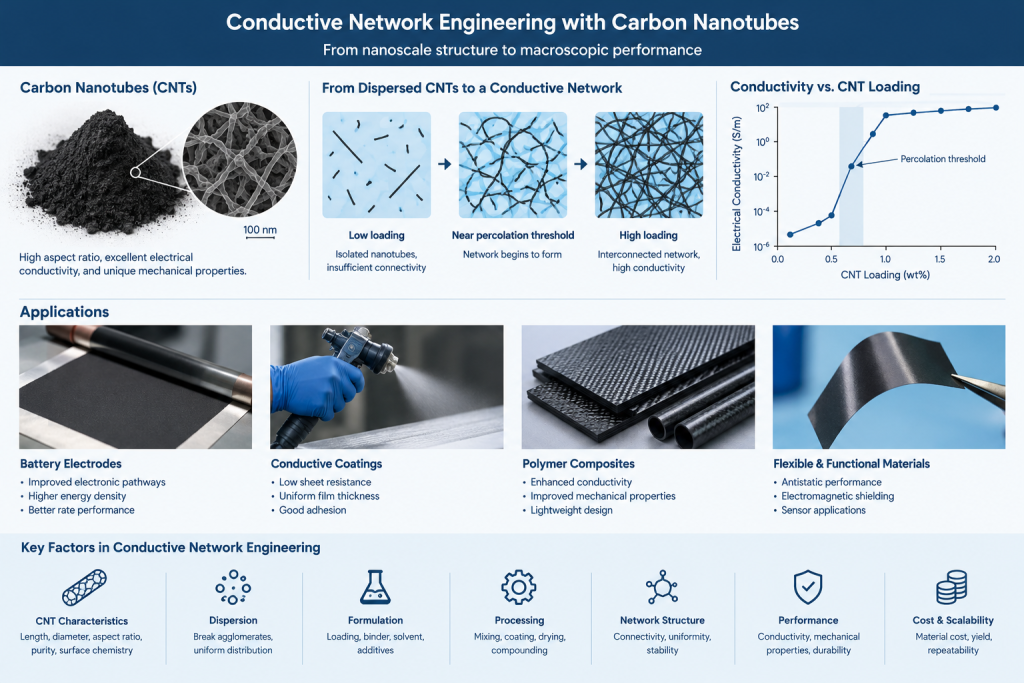
Conductive Network Engineering with Carbon Nanotubes
Conductive Network Engineering with Carbon Nanotubes Carbon nanotubes (CNTs) are widely investigated as conductive additives for batteries, conductive ...
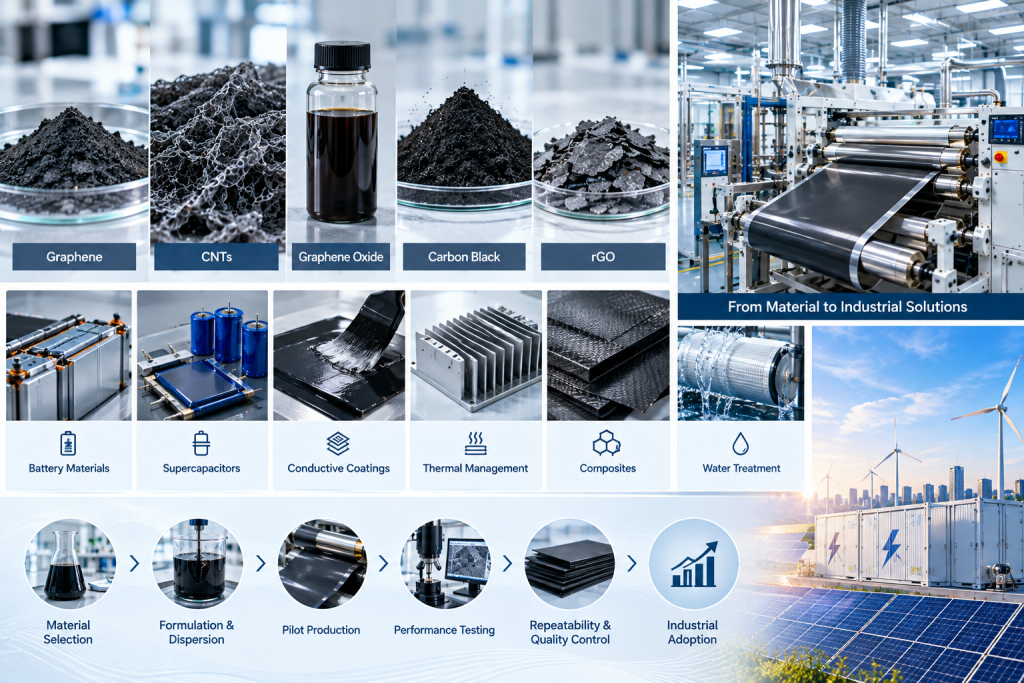
Industrializing Advanced Carbon Materials: Challenges and Opportunities
Industrializing Advanced Carbon Materials: Challenges and Opportunities Advanced carbon materials are attracting increasing attention across energy st ...
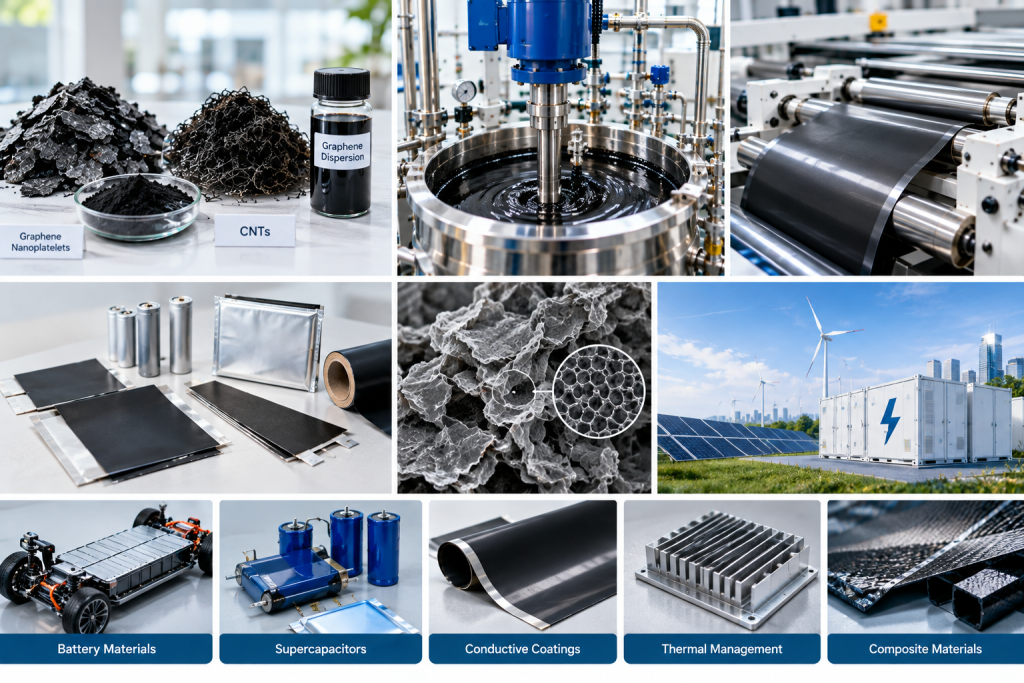
Why Do Most Battery Materials Fail During Scale-Up?
Why Do Most Battery Materials Fail During Scale-Up? A battery material can deliver excellent results in a laboratory coin cell and still fail when the ...
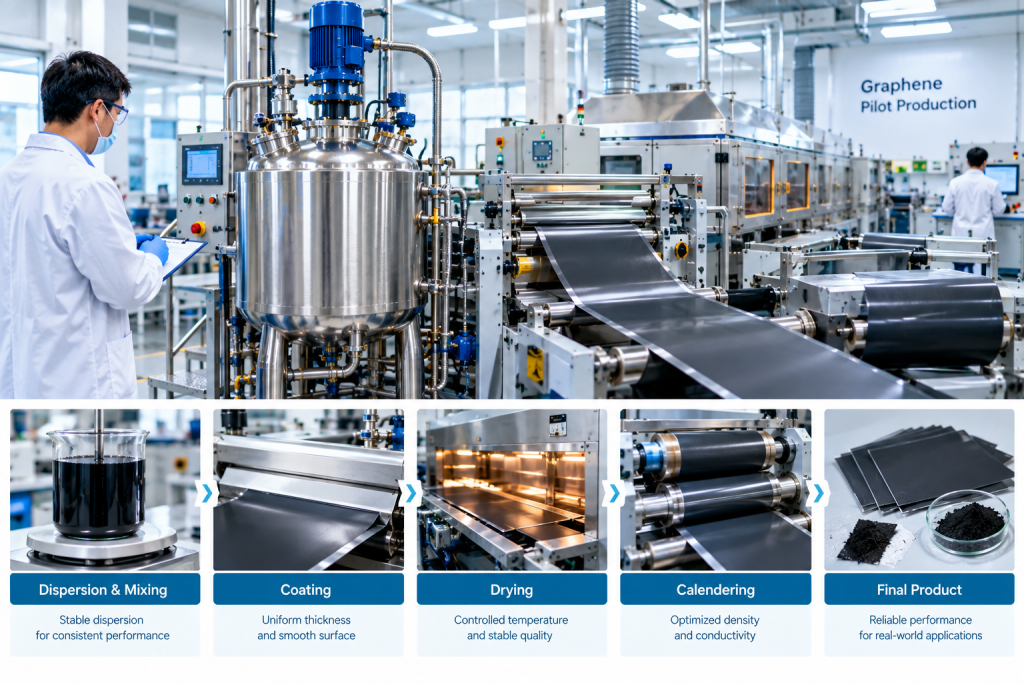
Outsourcing Pilot Production for Graphene: What to Consider
Outsourcing Pilot Production for Graphene: What to Consider Graphene has attracted interest across conductive coatings, battery materials, thermal man ...
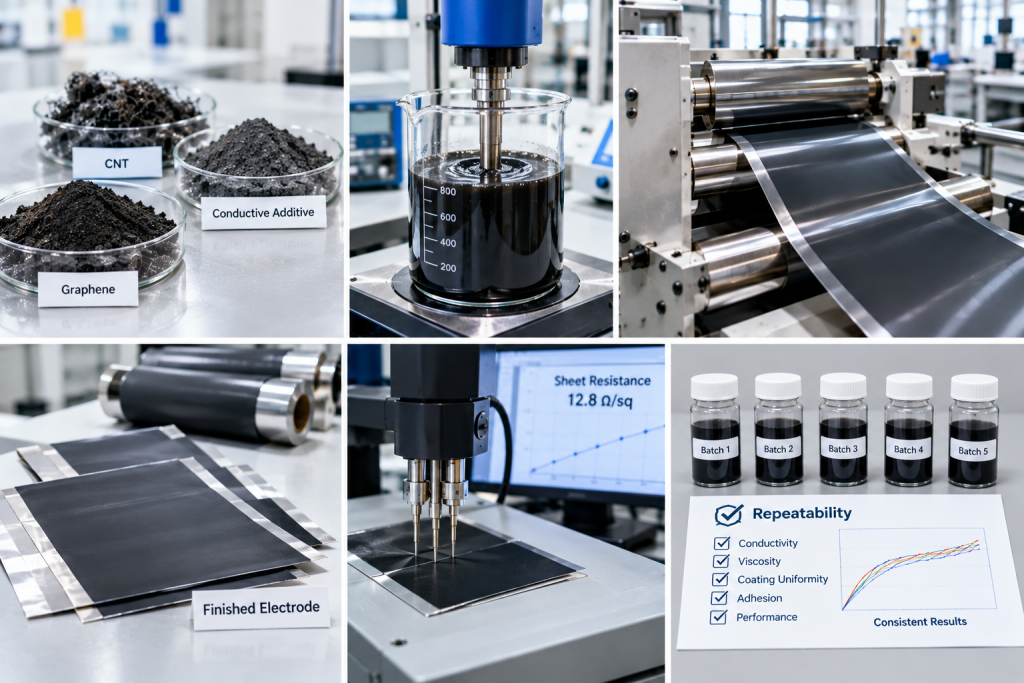
Why Material Repeatability Is Critical for Industrial Adoption
Why Material Repeatability Is Critical for Industrial Adoption Advanced materials often demonstrate promising performance in laboratory testing. Graph ...
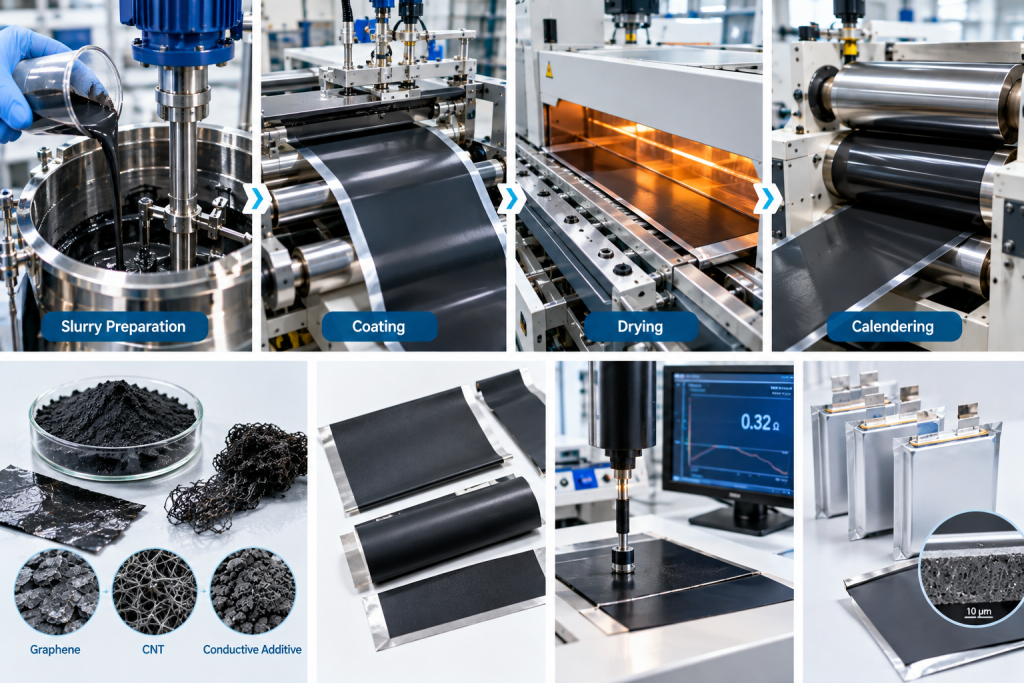
Pilot-Scale Validation for Conductive Coatings and Electrodes
Pilot-Scale Validation for Conductive Coatings and Electrodes Conductive coatings and electrodes are widely used in battery manufacturing, electronics ...
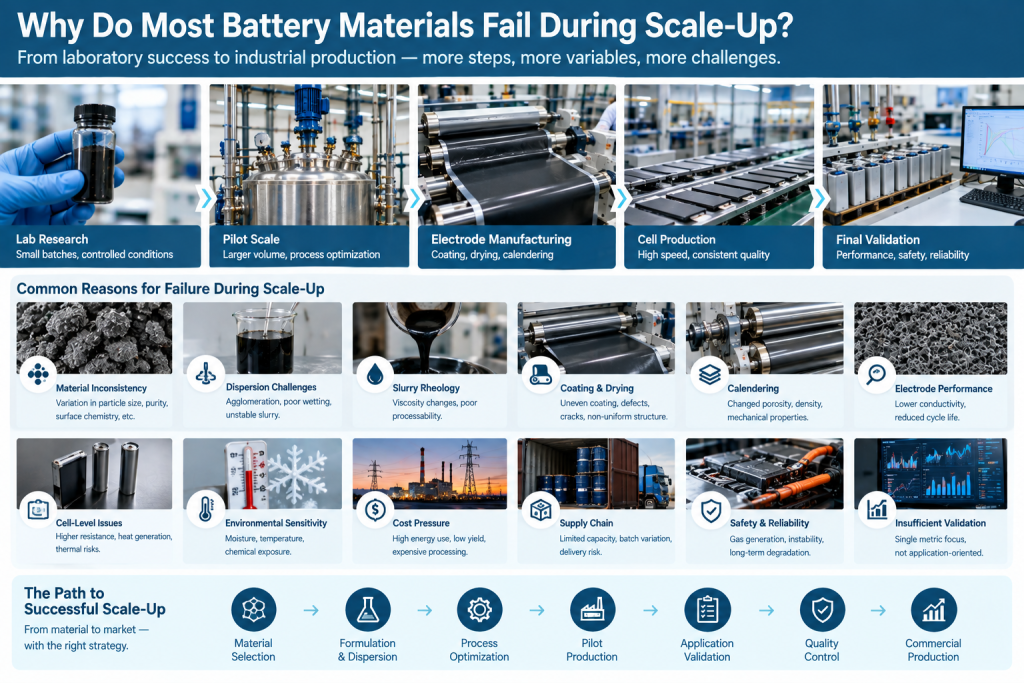
Why Do Most Battery Materials Fail During Scale-Up?
Why Do Most Battery Materials Fail During Scale-Up? A battery material can deliver excellent results in a laboratory coin cell and still fail when the ...