

CNT Masterbatch for Plastic Conductivity Enhancement
How Carbon Nanotube Masterbatch Upgrades Plastics for ESD, EMI, and Structural Performance**
As electronics proliferate across every industry—automotive, consumer electronics, aerospace, packaging, and industrial equipment—the demand for conductive and antistatic plastics continues to rise. Traditional conductive additives such as carbon black and metal fibers are losing competitiveness as manufacturers require lighter, cleaner, stronger, and more electrically stable materials.
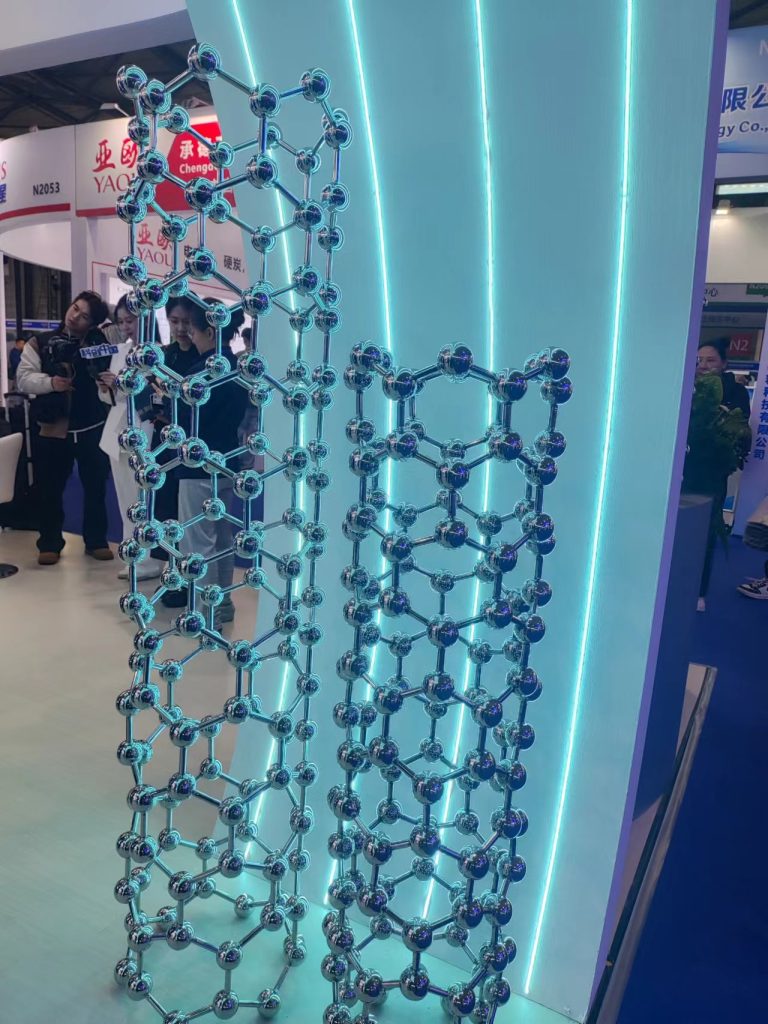
Carbon Nanotube (CNT) masterbatch has emerged as the most efficient way to impart conductivity to polymers. Through a pre-dispersed and highly loaded concentrate, CNT masterbatch allows processors to upgrade standard plastics into ESD-safe, EMI-shielded, reinforced, and more durable materials, while maintaining processability.
This article explains how CNT masterbatch works, why it outperforms conventional additives, key formulation and processing considerations, and how industry sectors are adopting CNT-enabled conductive plastics.
1. What Is CNT Masterbatch?
CNT masterbatch is a pre-dispersed mixture of carbon nanotubes in a polymer carrier, typically with a CNT content from 10–20 wt%, depending on application and viscosity requirements.
Common carriers include:
-
PP, PE – for packaging, automotive, general-purpose plastics
-
ABS, PC, PA – for electronics, structural parts
-
TPU – for flexible cables, belts, and films
-
PPS, PEEK – for high-temperature and engineering applications
Masterbatch greatly simplifies processing by solving the two key problems in using raw CNT powder:
-
Dispersion (raw CNTs agglomerate strongly)
-
Homogeneous dosing (handling nano-powders is problematic and unsafe)
By diluting the masterbatch into a base resin, manufacturers can achieve the desired conductivity with 0.1–3 wt% final CNT loading, depending on target surface resistivity.
2. Why CNT Masterbatch Enables Better Conductive Plastics
✔ 2.1 Lower Percolation Threshold
CNTs offer a conductive network at far lower loadings compared to carbon black or graphite.
-
CNT percolation threshold: 0.1–0.5%
-
Carbon black: 8–20%
-
Metal fibers: >20%
This means plastics retain:
-
Lower density
-
Better flow
-
Higher toughness
-
Better surface quality
-
Less tool wear
✔ 2.2 Superior Conductivity Stability
CNT networks maintain conductivity:
-
Over wide temperature ranges
-
After repeated bending or flexing
-
After mechanical processing (extrusion, injection molding)
-
Under humidity and aging conditions
Carbon black networks break more easily, causing resistivity drift.
✔ 2.3 Mechanical Reinforcement
CNTs simultaneously enhance:
-
Tensile strength
-
Impact resistance
-
Fatigue resistance
-
Wear resistance
This dual functionality makes CNT masterbatch ideal for structural ESD parts.
✔ 2.4 Cleaner Appearance
CNT masterbatch provides:
-
Darker, uniform black color
-
Smoother surface
-
No metal fiber splinters
-
No shedding or contamination
Critical for electronics packaging and cleanroom applications.
3. Key Applications of CNT Masterbatch
3.1 ESD-Safe Plastics for Electronics Packaging
Target resistivity: 10⁴–10⁹ Ω/sq
Used in:
-
IC trays, carriers, tubes
-
Chip packaging boxes
-
Hard-disk drive components
-
Electronic assembly fixtures
CNT masterbatch ensures stable ESD protection without overloading resin.
3.2 EMI Shielding Components
Target resistivity: 10¹–10³ Ω/sq
CNTs create conductive pathways that provide EMI attenuation for:
-
Consumer electronics housings
-
EV automotive electronics
-
Industrial control boxes
-
High-frequency communication devices
While not as conductive as metals, CNT–polymer composites offer lightweight EMI shielding ideal for portable and automotive systems.
3.3 Conductive Automotive Parts
Applications include:
-
Fuel cap dissipative parts
-
Interior decorative trim
-
Sensor housings
-
Airbag components
-
Battery module enclosures
CNT masterbatch allows conductive plastics without compromising mechanical strength.
3.4 Conveying System Components (Conveyor Belts, Rollers, Pipes)
CNT-modified plastics prevent:
-
Dust accumulation
-
Static sparks
-
Explosive discharge in chemical and powder plants
Also used for antistatic hoses, films, and connectors.
3.5 3D Printing Filaments (FDM)
CNT masterbatch is an efficient way to create:
-
Conductive ABS
-
Conductive PLA
-
Conductive Nylon
Applications include robotic components and sensors.
4. Technical Considerations When Using CNT Masterbatch
4.1 Choosing the Right CNT Type
Common CNTs for masterbatch:
-
Multi-Walled CNT (MWCNT)
-
Most common
-
Good conductivity + mechanical reinforcement
-
Cost-effective
-
-
Single-Walled CNT (SWCNT)
-
Exceptional conductivity
-
High cost
-
Used in high-end EMI shielding or aerospace-grade parts
-
Graphene/CNT hybrids are also emerging to optimize conductivity and mechanical balance.
4.2 Dispersion Quality
Agglomeration reduces conductivity dramatically.
Indicators of good dispersion:
-
Uniform black color
-
Consistent resistivity across molded parts
-
No visible speckles or clumps
Twin-screw compounding at proper shear levels is essential.
4.3 Processing Conditions
CNTs may increase melt viscosity.
Processing tips:
-
Increase melt temperature by 10–20°C
-
Increase injection pressure
-
Use high-shear screws
-
Dry resin thoroughly
Avoid excessive shear that may break CNT structures.
4.4 Final Resistivity Tuning
CNT loading vs expected resistivity:
| CNT Level (wt%) | Surface Resistivity (Ω/sq) | Application |
|---|---|---|
| 0.1–0.5% | 10⁶–10⁹ | ESD packaging |
| 0.5–1.5% | 10³–10⁶ | Conductive parts |
| 1.5–3% | 10¹–10³ | EMI shielding |
Depending on resin type and dispersion, actual results vary.
5. Industry Adoption and Future Trends
✔ Automotive
Using CNT composites for EV battery structures, lightweight housings, and antistatic parts.
✔ Consumer Electronics
Thin-wall conductive housings and connectors.
✔ Industrial Automation
ESD-safe robotics and fixtures.
✔ Logistics and Packaging
Reusable ESD-safe boxes and pallets.
✔ Smart Materials
CNT composites enabling flexible sensors and integrated conductive paths.
Future trends include:
-
CNT + graphene hybrid masterbatch
-
Waterborne CNT dispersions for coatings
-
CNT masterbatch for 3D printed functional electronics
-
Ultra-low-loading CNT enabling transparent conductive plastics
CNT masterbatch is transforming how industries produce conductive plastics. With low percolation threshold, stable conductivity, mechanical reinforcement, and clean appearance, it outperforms carbon black and metal fillers in almost every category.
As electronics continue to integrate into every product segment, CNT masterbatch provides a powerful, scalable solution for creating lightweight, high-performance, ESD-safe, and EMI-shielding plastics.