

CNT vs Graphene: Market Positioning and Coexistence
1. Competition or Complementarity?
Carbon nanotubes (CNTs) and graphene are often presented as competing advanced carbon materials. Both offer exceptional electrical, mechanical, and thermal properties, and both have attracted significant industrial interest over the past decade.
However, real-world adoption shows that CNTs and graphene are not substitutes in most applications. Instead, they occupy distinct market positions and increasingly coexist within the same material systems. Understanding this coexistence is essential for rational material selection and long-term technology strategy.
2. Structural Differences Define Market Roles
The fundamental difference between CNTs and graphene lies in their structure:
-
CNTs: one-dimensional, high-aspect-ratio conductive fibers
-
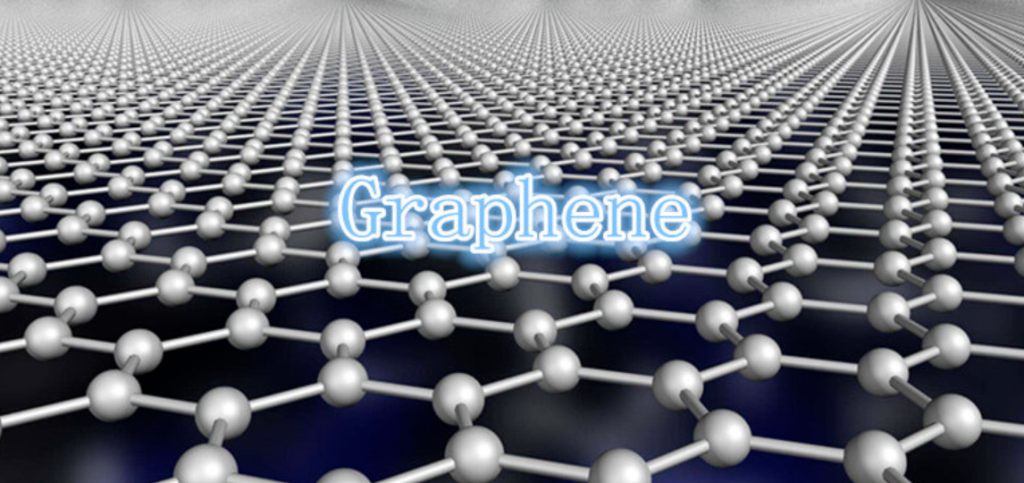
Graphene: two-dimensional, planar conductive sheets
These structural differences determine how each material forms conductive networks, interacts with matrices, and behaves under mechanical and environmental stress.
3. CNT Market Positioning: Network Stability and Process Robustness
CNTs are primarily positioned as conductive network builders.
Key strengths include:
-
Extremely low percolation threshold
-
Stable conductivity at low loading
-
Excellent strain tolerance
-
Reliable performance in polymers and coatings
CNTs dominate applications requiring:
-
ESD and EMI control
-
Conductive plastics
-
Flexible and stretchable electronics
-
Battery conductive additives
Their ability to deliver stable conductivity with minimal formulation disruption makes them attractive for industrial-scale manufacturing.
4. Graphene Market Positioning: Planar Conductivity and Functional Enhancement
Graphene is best positioned as a functional enhancement material.
Key strengths include:
-
High in-plane electrical and thermal conductivity
-
Barrier and reinforcement properties
-
Potential for transparency
Graphene is well suited for:
-
Thermal interface materials
-
Coatings requiring planar conductivity
-
Structural reinforcement
-
Transparent or semi-transparent conductors
However, graphene often requires higher loading or hybridization to achieve stable bulk conductivity.
5. Processing and Manufacturing Considerations
CNTs generally integrate more easily into existing processes due to:
-
Lower loading requirements
-
Less impact on rheology
Graphene requires careful control of:
-
Sheet size and thickness
-
Orientation and dispersion
As a result, CNT adoption has advanced faster in mass-production environments.
6. Hybrid CNT–Graphene Systems: Where Coexistence Creates Value
Increasingly, the most successful commercial systems combine CNTs and graphene.
Hybrid systems leverage:
-
CNTs to form robust 3D conductive networks
-
Graphene to enhance in-plane conductivity and thermal performance
Applications include:
-
Conductive coatings
-
EMI shielding layers
-
Thermal–electrical multifunctional materials
This coexistence model delivers superior performance at optimized cost.
7. Cost–Performance Dynamics
| Parameter | CNT | Graphene |
|---|---|---|
| Percolation efficiency | Very high | Moderate |
| Typical loading | Very low | Moderate |
| Process robustness | High | Moderate |
| Functional enhancement | Moderate | High |
| Best ROI domains | Polymers, coatings | Thermal, coatings |
CNTs often deliver higher ROI where stable conductivity is the primary goal, while graphene adds value where thermal or planar properties are critical.
8. Market Adoption Trends
CNT markets are maturing with:
-
Stable demand growth
-
Application-specific grades
-
Strong industrial integration
Graphene markets remain more fragmented but are advancing rapidly in:
-
Coatings
-
Thermal management
-
Composite materials
The two markets are converging rather than competing.
9. Strategic Implications for Material Selection
For manufacturers and system designers:
-
Choose CNTs when conductivity stability and processability are critical
-
Choose graphene when planar or thermal performance dominates
-
Use hybrid systems to balance performance and cost
Avoid treating CNTs and graphene as interchangeable materials.
10. Future Outlook: Coexistence, Not Replacement
Over the next decade, CNTs and graphene will increasingly be used together in application-driven systems. Rather than a winner-takes-all scenario, the market will favor materials that integrate well into real manufacturing workflows and deliver predictable performance.
CNTs will remain the backbone of conductive networks, while graphene will expand as a functional enhancer. Their coexistence will define the next generation of advanced carbon material solutions.
CNTs and graphene serve different but complementary roles in the advanced materials landscape. Understanding their structural differences, market positioning, and coexistence logic enables smarter material selection and stronger long-term technology strategies.
In practice, the most competitive products will not choose between CNTs and graphene—they will combine them intelligently.