
Fire Resistant Paint Formulations with Graphene Oxide
Mechanisms, Formulation Strategies, and Performance Advantages
Introduction: Why Fire-Resistant Coatings Need Smarter Fillers
Fire-resistant paints play a critical role in protecting buildings, industrial equipment, and infrastructure by delaying ignition, slowing flame spread, and reducing heat transfer.
Traditional flame-retardant coatings rely heavily on:
-
High loading of inorganic fillers
-
Halogenated or phosphorus-based additives
-
Intumescent systems with limited durability
These approaches often compromise mechanical strength, adhesion, flexibility, and long-term stability.
In recent years, Graphene Oxide (GO) has emerged as a next-generation functional additive that enables fire resistance with lower loading and multifunctional performance.
What Makes Graphene Oxide Different?
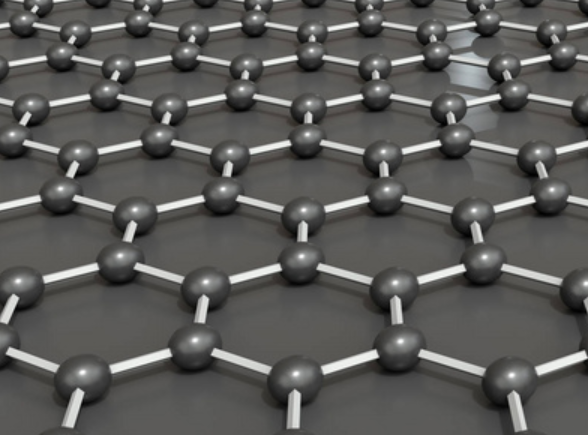
Graphene Oxide is a two-dimensional carbon material with:
-
High aspect ratio nanosheets
-
Oxygen-containing functional groups (–OH, –COOH, epoxy)
-
Excellent dispersion compatibility in waterborne and solvent systems
Unlike traditional flame retardants, GO does not primarily act by releasing flame-quenching gases.
Instead, it works through physical and structural fire-protection mechanisms.
Fire Resistance Mechanisms of Graphene Oxide
1. Physical Barrier Effect
When exposed to heat or flame, GO nanosheets:
-
Align and overlap within the coating
-
Form a tortuous diffusion path for heat, oxygen, and combustible gases
This significantly slows:
-
Heat penetration into the substrate
-
Oxygen diffusion toward the fire source
The result is delayed ignition and reduced flame spread.
2. Char Formation Enhancement
Graphene Oxide promotes:
-
Stable, continuous char layers
-
Dense carbonaceous residues after combustion
In intumescent systems, GO:
-
Reinforces the expanding char structure
-
Prevents cracking and collapse of the protective layer
This improves fire endurance time and structural integrity during fire exposure.
3. Synergy with Traditional Flame Retardants
GO shows strong synergistic effects with:
-
Ammonium polyphosphate (APP)
-
Melamine-based systems
-
Phosphorus–nitrogen flame retardants
By reinforcing the char network, GO allows:
-
Reduced loading of conventional flame retardants
-
Lower smoke density
-
Improved coating durability
Formulation Strategies for GO-Based Fire-Resistant Paints
Recommended GO Loading Levels
Typical effective loading:
-
0.1–1.0 wt% (based on total formulation)
Even at very low concentrations, GO can significantly enhance fire performance when well dispersed.
Compatible Coating Systems
Graphene Oxide is especially suitable for:
-
Waterborne acrylic paints
-
Epoxy fire-protection coatings
-
Intumescent architectural coatings
-
Cementitious and hybrid inorganic–organic systems
Its surface functional groups enable strong interaction with polymer binders and inorganic fillers.
Dispersion Considerations
Key formulation points:
-
Use pre-dispersed GO slurries where possible
-
Avoid aggressive high-shear that fragments nanosheets
-
Add GO during early dispersion stages for network formation
Proper dispersion is critical to achieving continuous barrier structures.
Performance Benefits Beyond Fire Resistance
One of GO’s strongest advantages is multifunctionality.
In addition to fire resistance, GO-enhanced coatings often show:
-
Improved adhesion to metal and concrete substrates
-
Reduced crack propagation
-
Lower gas and moisture permeability
-
Enhanced corrosion resistance
-
Improved mechanical integrity after thermal cycling
This makes GO particularly attractive for long-life industrial and infrastructure coatings.
Comparison with Conventional Flame-Retardant Fillers
| Parameter | Conventional FR Fillers | Graphene Oxide |
|---|---|---|
| Typical Loading | 15–40 wt% | 0.1–1 wt% |
| Fire Mechanism | Chemical / gas-phase | Physical barrier + char |
| Effect on Mechanical Properties | Often negative | Often positive |
| Smoke Suppression | Limited | Improved |
| Coating Density | High | Minimal impact |
| Multifunctionality | Low | High |
Application Areas
Graphene Oxide fire-resistant paints are especially suited for:
-
Structural steel fire protection
-
Industrial equipment and pipelines
-
Tunnels and transportation infrastructure
-
Battery enclosures and energy systems
-
Marine and offshore installations
These applications benefit from thin coatings with long-term stability, where traditional high-loading systems struggle.
Regulatory and Testing Considerations
GO-enhanced coatings are typically evaluated using:
-
Limiting Oxygen Index (LOI)
-
Cone calorimetry
-
Flame spread index tests
-
Smoke density measurements
Importantly, GO acts as a performance enhancer, not a regulated flame-retardant chemical, simplifying compliance in many regions.
Future Outlook
As fire safety standards become more stringent and sustainability concerns grow, the industry is shifting toward:
-
Lower additive loading
-
Halogen-free formulations
-
Multifunctional coating systems
Graphene Oxide aligns naturally with these trends and is expected to play a growing role in next-generation fire-resistant paint technologies.
Graphene Oxide enables a new design logic for fire-resistant paints—less material, smarter structure, and broader performance.
By reinforcing barrier effects and char stability at low loading, GO allows formulators to achieve fire protection without sacrificing mechanical durability or processability.
For advanced fire-resistant coatings, Graphene Oxide is no longer just an additive—it is a structural design element.