
Graphene in Thermal Interface Materials (TIM)
How Advanced Carbon Materials Improve Heat Transfer Efficiency
As electronic devices continue to increase in power density, thermal management has become one of the most critical challenges in modern engineering. From AI processors and data centers to electric vehicles and energy storage systems, managing heat efficiently is essential for performance, reliability, and safety.
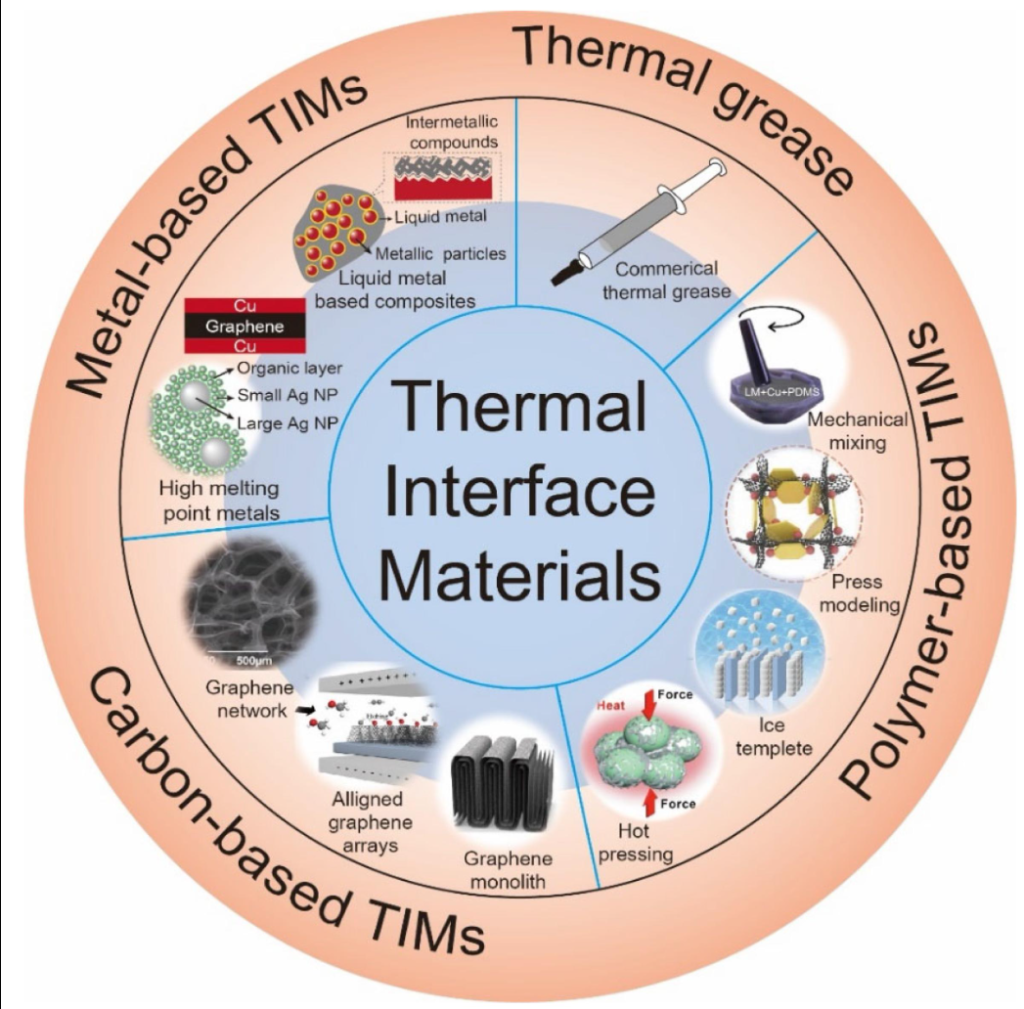
At the center of this challenge lies a often-overlooked component: thermal interface materials (TIMs).
In recent years, graphene has emerged as a powerful additive and functional material in TIMs. But how exactly does graphene improve thermal interface performance? And what does it take to translate material properties into real-world results?
What Are Thermal Interface Materials (TIMs)?
Thermal interface materials are used to improve heat transfer between two solid surfaces, typically:
- a heat-generating component (e.g., CPU, GPU, battery cell)
- a heat dissipation component (e.g., heat sink, cooling plate)
Even when two surfaces appear smooth, microscopic roughness creates air gaps, which significantly reduce heat transfer efficiency because air is a poor thermal conductor.
TIMs are designed to:
- fill these gaps
- increase actual contact area
- reduce thermal resistance
Common types of TIMs include:
- thermal greases and pastes
- thermal pads
- phase change materials
- gap fillers
- thermal adhesives
The Thermal Bottleneck: Interfaces, Not Materials
In many systems, the limiting factor is not the bulk thermal conductivity of materials like aluminum or copper, but the interface between them.
This is known as thermal contact resistance.
Even highly conductive materials cannot perform effectively if:
- surface contact is poor
- gaps are present
- heat pathways are interrupted
This is where advanced materials like graphene can make a meaningful difference.
Why Graphene Is Attractive for TIMs
Graphene offers a unique combination of properties that make it highly suitable for thermal interface applications:
1. High Intrinsic Thermal Conductivity
Graphene’s in-plane thermal conductivity is significantly higher than traditional fillers.
This enables:
- rapid heat spreading
- efficient energy transfer across the interface
2. High Aspect Ratio
Graphene nanoplatelets (GNP) have a large lateral size but very small thickness.
This allows them to:
- form conductive networks at lower loading levels
- bridge gaps more effectively than spherical particles
3. Mechanical Flexibility
Graphene sheets are flexible and can conform to surface irregularities.
This improves:
- contact quality
- interface conformity
- gap filling efficiency
4. Lightweight and Thin
Compared to metal-based fillers, graphene:
- adds minimal weight
- enables thinner TIM layers
- supports compact system design
How Graphene Works Inside TIMs
Graphene does not simply “add conductivity” — it changes how heat flows through the material.
1. Formation of Thermal Networks
When properly dispersed, graphene creates interconnected pathways that allow heat to move more efficiently.
This reduces:
- phonon scattering
- thermal resistance within the TIM
2. Gap Bridging
Due to its shape, graphene can span across microscopic gaps between surfaces.
This improves:
- effective contact area
- continuity of heat transfer
3. Heat Spreading
Graphene’s high in-plane conductivity enables lateral heat spreading.
This helps:
- reduce hotspots
- distribute heat more evenly
Types of Graphene Used in TIMs
Different forms of graphene are used depending on the formulation and application.
Graphene Nanoplatelets (GNP)
- Most commonly used
- Good balance of cost and performance
- Ideal for conductive networks
Reduced Graphene Oxide (rGO)
- Derived from graphene oxide
- More defects but easier to process
- Suitable for certain composite systems
Functionalized Graphene
- Surface-modified for better dispersion
- Improved compatibility with polymers
- Enhanced stability in formulations
Performance Benefits in Real Applications
Electronics Cooling
Graphene-enhanced TIMs are used in:
- CPUs and GPUs
- power electronics
- high-density computing systems
Benefits include:
- lower operating temperatures
- improved reliability
- sustained performance under load
Battery Systems
In battery packs:
- heat accumulation affects safety and lifespan
- uneven temperature distribution reduces efficiency
Graphene-based TIMs help:
- improve heat dissipation between cells
- stabilize thermal gradients
- enhance system safety
Automotive and EV Applications
Electric vehicles require efficient thermal management across:
- battery modules
- inverters
- onboard electronics
Graphene TIMs support:
- lightweight solutions
- compact thermal designs
- improved system integration
Challenges in Using Graphene in TIMs
Despite its advantages, graphene is not a “plug-and-play” solution.
1. Dispersion Difficulty
Graphene tends to agglomerate due to strong van der Waals forces.
Poor dispersion leads to:
- reduced thermal performance
- inconsistent results
2. Interface Resistance
Even with high conductivity, performance can be limited by:
- poor interaction with the matrix
- weak bonding between materials
3. Loading Optimization
Adding more graphene does not always improve performance.
High loading levels can:
- increase viscosity
- reduce processability
- create defects
4. Cost-Performance Balance
Graphene must compete with:
- aluminum oxide
- silver
- boron nitride
The key is achieving better performance at acceptable cost.
The Importance of Formulation Engineering
Successful graphene-based TIMs depend on more than just the material itself.
Critical factors include:
- filler combination (hybrid systems)
- particle size distribution
- matrix selection (silicone, epoxy, etc.)
- processing methods
In many cases, hybrid filler systems (graphene + traditional fillers) deliver the best results.
From Lab to Production: Why Pilot Lines Matter
A common challenge in TIM development is the gap between lab performance and industrial scalability.
Key questions include:
- Can graphene be uniformly dispersed at scale?
- Does performance remain stable in mass production?
- Is the process compatible with existing manufacturing lines?
Pilot-scale validation allows companies to:
- optimize formulations
- test real application conditions
- reduce scale-up risks
Future Trends
Graphene in TIMs is still evolving.
Emerging directions include:
- ultra-thin graphene films for direct interface use
- hybrid structures combining graphene with ceramics
- alignment techniques to enhance directional conductivity
- integration with next-generation electronics and AI hardware
Graphene offers a powerful way to improve thermal interface materials by addressing one of the most critical challenges in thermal management: interface resistance.
Its unique structure enables:
- efficient heat transfer pathways
- improved surface contact
- enhanced thermal performance at the system level
However, realizing these benefits requires careful material selection, formulation design, and process validation.
As thermal demands continue to increase across industries, graphene-based TIMs are poised to play a key role—not just as a high-performance material, but as part of a broader engineered thermal solution.