
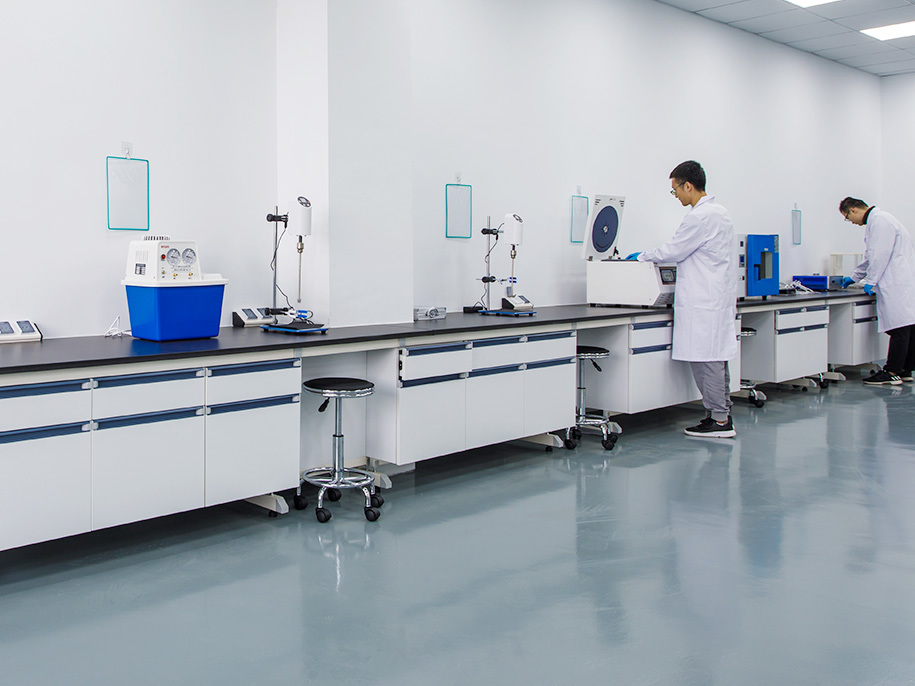
Why Many Battery Technologies Fail During Scale-Up
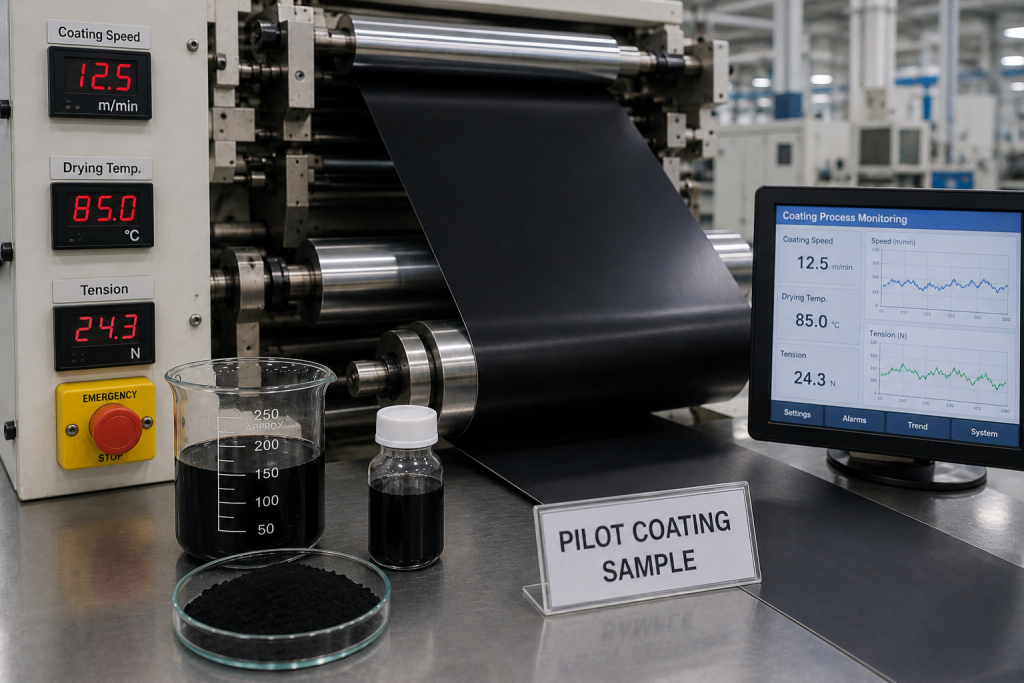
The battery industry is evolving rapidly as demand grows for:
- Electric vehicles (EVs)
- Energy storage systems (ESS)
- AI data center infrastructure
- Consumer electronics
- Renewable energy integration
Every year, new battery technologies promise:
- Higher energy density
- Faster charging
- Longer cycle life
- Improved safety
- Lower cost
However, despite strong laboratory performance, many battery technologies fail before reaching successful industrial production.
The reason is often not poor chemistry, but the difficulty of scale-up and manufacturing integration.
In reality:
The path from laboratory innovation to mass production is one of the hardest challenges in battery development.
What Is Battery Scale-Up?
Battery scale-up refers to the transition from:
- Laboratory research
to - Pilot manufacturing
to - Industrial mass production
This process includes:
- Electrode manufacturing
- Slurry preparation
- Coating optimization
- Drying and calendaring
- Cell assembly
- Yield stabilization
Scale-up determines whether a battery technology can become commercially viable.
Why Good Battery Technologies Still Fail
A battery material may show excellent results in:
- Coin cells
- Small laboratory prototypes
- Controlled testing conditions
But industrial production introduces completely different challenges.
Many technologies fail because:
Scientific performance alone is not enough for manufacturability.
Major Reasons Battery Technologies Fail During Scale-Up
1. Slurry Instability
Battery slurry behavior changes significantly at larger scale.
Common problems include:
- Sedimentation
- Viscosity fluctuation
- CNT entanglement
- Graphene restacking
- Poor dispersion consistency
These issues directly affect:
- Coating quality
- Conductive network formation
- Production stability
2. Electrode Coating Challenges
Laboratory coating is often:
- Slow
- Manual
- Small-area
Industrial production requires:
- Continuous roll-to-roll coating
- High-speed processing
- Uniform large-area coating
Small coating variations can create:
- Capacity inconsistency
- Resistance variation
- Yield loss
3. Drying and Structural Problems
Drying strongly influences:
- Electrode porosity
- Binder distribution
- Mechanical integrity
- Conductive pathways
Scale-up often introduces:
- Cracking
- Delamination
- Uneven drying
- Structural instability
These defects may not appear in laboratory-scale testing.
4. Process Stability Issues
Many advanced battery materials are highly sensitive to:
- Temperature
- Mixing conditions
- Humidity
- Pressure
- Process timing
Maintaining stable production conditions becomes much harder during continuous manufacturing.
5. Yield Loss During Manufacturing
At industrial scale:
Yield becomes critical.
Even small process defects can cause:
- Scrap increase
- Product inconsistency
- Higher production cost
- Commercial failure
A battery technology with low manufacturing yield may never become economically viable.
6. Scale Changes Material Behavior
Materials often behave differently when moving from:
- grams
to - kilograms
to - tons
Examples include:
Silicon Anodes
- Excellent laboratory capacity
- Severe expansion during large-scale cycling
Solid-State Batteries
- Good small-cell performance
- Interface instability during manufacturing
CNT and Graphene Conductive Systems
- Strong laboratory conductivity
- Dispersion instability at production scale
Why Pilot Validation Is Essential
Pilot manufacturing bridges the gap between:
Laboratory research
and
Gigafactory-scale production
Pilot lines allow realistic testing of:
- Coating stability
- Slurry rheology
- Drying behavior
- Process repeatability
- Equipment compatibility
before large-scale investment.
The Importance of Manufacturability
The battery industry is increasingly shifting from:
“Can the battery work?”
toward:
“Can the battery be manufactured consistently at scale?”
This shift is making manufacturability one of the most important aspects of battery innovation.
Why Process Engineering Matters
Battery commercialization depends heavily on:
- Electrode engineering
- Process optimization
- Manufacturing integration
- Production stability
In many cases:
Process engineering determines commercial success more than material performance alone.
Common Scale-Up Bottlenecks
| Scale-Up Challenge | Industrial Impact |
|---|---|
| Slurry instability | Coating defects |
| Poor dispersion | Conductivity inconsistency |
| Drying non-uniformity | Cracking and delamination |
| Yield instability | High manufacturing cost |
| Equipment incompatibility | Production failure |
Why Co-Development Is Becoming Essential
Successful battery industrialization increasingly requires collaboration between:
- Material suppliers
- Pilot manufacturing teams
- Equipment companies
- Cell manufacturers
- OEMs
The future of battery innovation is becoming:
Integrated material + process + manufacturing engineering.
Technologies Most Affected by Scale-Up Challenges
Solid-State Batteries
Require extremely stable interface engineering and pressure control.
Silicon Anodes
Need advanced expansion management and electrode stability.
Thick Electrodes
Require optimized ion transport and drying control.
Advanced Conductive Networks
CNT and graphene systems depend heavily on dispersion stability and coating uniformity.
Future Trends in Battery Scale-Up
The industry is moving toward:
- AI-assisted manufacturing optimization
- Digital twin production systems
- Smart in-line monitoring
- Dry electrode manufacturing
- Pilot-scale industrial validation platforms
These technologies aim to reduce industrialization risk.
Many battery technologies fail during scale-up not because the chemistry is poor, but because industrial manufacturing is far more complex than laboratory testing.
Successful commercialization requires more than strong electrochemical performance. It also requires:
- Process stability
- Pilot validation
- Manufacturing integration
- Yield optimization
- Industrial scalability
The companies that succeed will be those capable of transforming laboratory innovation into stable, manufacturable, large-scale battery production systems.