
Why Battery Manufacturing Ramp-Up and Yield Control Matter More Than Equipment
In the lithium battery industry, many companies believe that once equipment is installed, mass production can begin immediately.
In reality, the most difficult and expensive stage often starts after the production line is completed.
This stage is called:
Production Ramp-Up
For battery manufacturers, ramp-up is the process of gradually increasing:
- Production stability
- Manufacturing consistency
- Product yield
- Equipment utilization
- Process control capability
A battery factory does not become profitable simply because it can produce cells.
The real challenge is whether it can produce millions of stable, qualified cells continuously.
Pilot Production Success Does Not Mean Mass Production Success
Many startups and new battery projects misunderstand this point.
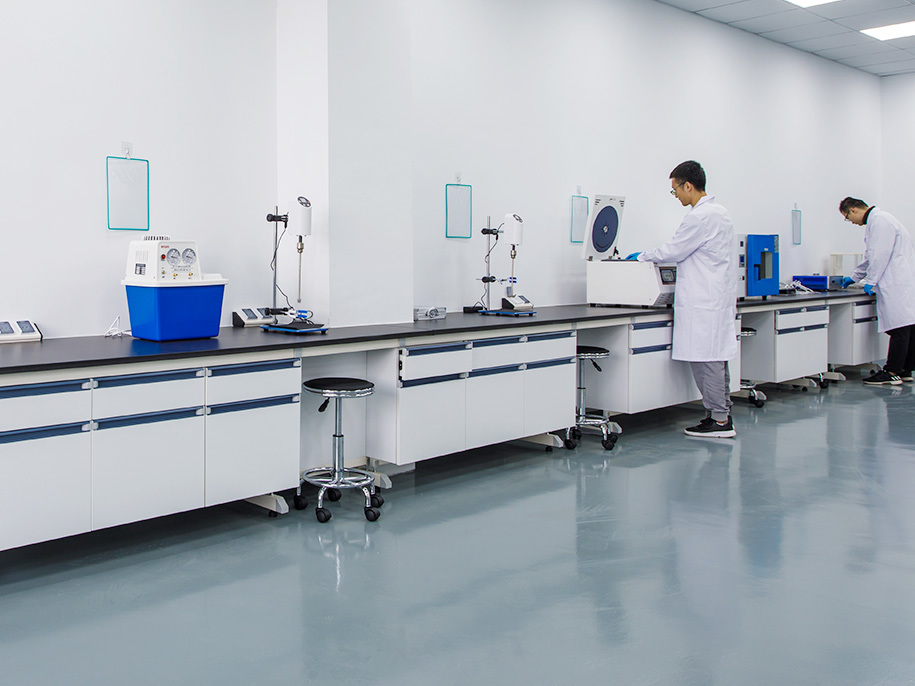
A laboratory or pilot line may successfully produce:
- Coin cells
- Small pouch cells
- Prototype prismatic cells
However, these are often:
- Low-volume
- Semi-manual
- Closely monitored by engineers
Under these conditions, problems can be hidden.
Mass production is completely different.
When production scales to GWh-level manufacturing, the factory may process:
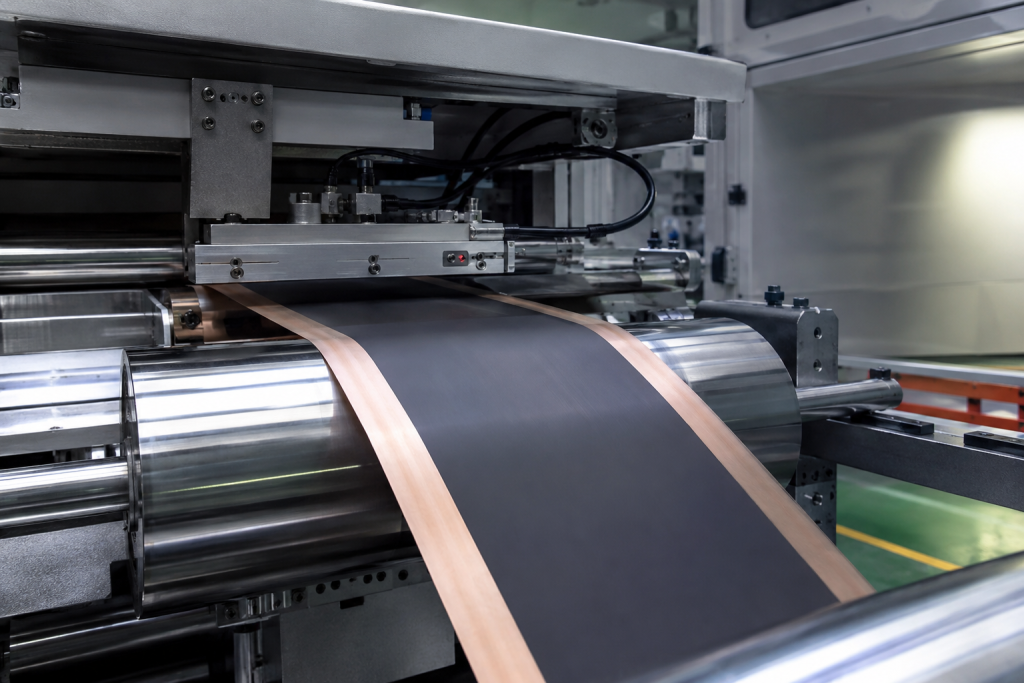
- Hundreds of kilometers of electrodes
- Thousands of cells per day
- Continuous 24/7 production
At this stage, small process deviations become major manufacturing failures. graphene for Lithium Battery application
What Is Battery Yield?
Battery yield refers to the percentage of qualified products during manufacturing.
Yield=Qualified CellsTotal Cells Produced\{Yield}={Qualified Cells}}{{Total Cells Produced}}
For example:
- 10,000 cells produced
- 8,000 cells pass inspection
The yield is 80%.
In large-format ESS battery manufacturing, yield is critical because each failed cell represents:
- Material waste
- Energy waste during formation
- Labor cost
- Production downtime
- Additional testing and rework
Large-capacity cells such as 587Ah or 600Ah ESS batteries are especially expensive to scrap.
Why Yield Problems Often Appear Later
One of the biggest challenges in battery manufacturing is that many defects do not appear immediately.
Some cells may:
- Charge normally
- Pass initial testing
- Operate during short-term evaluation
But problems can emerge later during:
- Formation
- Aging
- Cycling tests
- Long-term storage
Typical mass production issues include:
- Electrode burrs causing internal short circuits
- Moisture contamination reducing cycle life
- Coating inconsistency affecting capacity distribution
- Winding tension instability causing swelling
- Poor welding increasing internal resistance
This is why pilot-scale validation is so important before full-scale investment.
The Reality of Production Ramp-Up
In many battery factories, the initial production yield can be extremely low.
A common industry scenario looks like this:
| Ramp-Up Stage | Typical Situation |
|---|---|
| Initial Production | 30%–50% yield |
| Early Optimization | 60%–70% yield |
| Stable Manufacturing | 80%–90% yield |
| Mature Production | 95%+ yield |
The first stage is often painful and expensive.
Factories may continuously:
- Scrap defective cells
- Adjust process parameters
- Modify equipment settings
- Rebuild production workflows
- Retrain operators
- Optimize drying and coating conditions
A Realistic Industry Example
One battery manufacturer began mass production with an initial yield of only around 50%.
Although the equipment was fully installed and operational, the factory faced major issues including:
- Electrode coating instability
- Cell swelling during formation
- Inconsistent welding quality
- Large variations in internal resistance
Over the next year, the company continued investing heavily into:
- Process optimization
- Engineering support
- Equipment tuning
- Production testing
- Material adjustment
The ramp-up process reportedly consumed tens of millions of RMB before the factory gradually improved yield to approximately 70–80%.
Even at this stage, profitability remained challenging.
This example reflects a common reality in battery manufacturing:
Mass production capability is not purchased instantly with equipment.
It is learned through continuous industrial experience, optimization, and expensive iteration. graphene for Lithium Battery application
Why Skipping Ramp-Up Can Be Catastrophic
Some companies attempt to move directly from pilot validation to large-scale production without sufficient ramp-up preparation.
This can lead to serious consequences:
- Massive product scrap
- Thermal safety failures
- Unstable battery consistency
- Warranty claims
- Delayed customer deliveries
- Cash flow collapse
In energy storage projects, inconsistent battery quality may eventually create:
- System failures
- Thermal runaway risks
- Reduced cycle life
- Safety incidents in the field
This is why experienced battery manufacturers place enormous importance on:
- Pilot-scale validation
- Process window development
- Yield engineering
- Continuous ramp-up optimization
The True Value of Pilot Production
A pilot line is not only used to prove that a battery can function.
Its real purpose is to expose manufacturing risks before entering billion-RMB mass production.
Pilot-scale manufacturing helps companies understand:
- Process stability
- Coating consistency
- Moisture sensitivity
- Electrode handling behavior
- Formation characteristics
- Manufacturing repeatability
Without this learning process, scaling directly to GWh-level production can become financially disastrous.
In Battery Manufacturing, Experience Is the Real Barrier
In today’s lithium battery industry, the most valuable capability is not simply making batteries.
The true competitive advantage is:
- Stable mass production
- High yield control
- Process consistency
- Long-term reliability
- Industrial manufacturing experience
This is why production ramp-up remains one of the most critical stages in scaling advanced battery technologies from laboratory innovation to commercial success.