
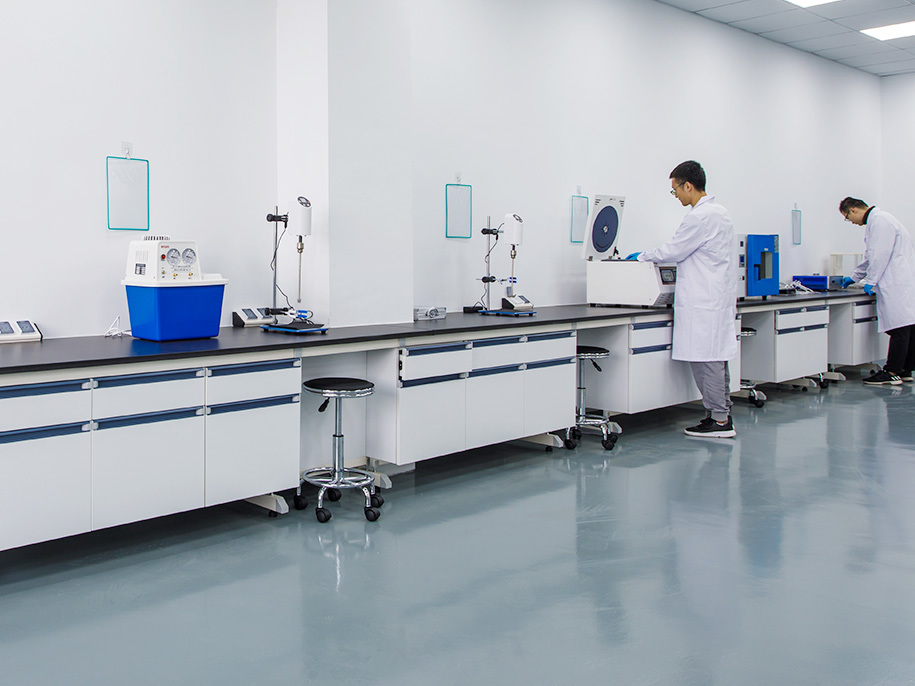
Drying and Solvent Control in Wet Electrode Processing
In lithium-ion battery manufacturing, significant attention is often given to materials, slurry preparation, and coating technologies.
However, one of the most critical—and frequently underestimated—stages occurs immediately after coating:
Electrode drying.
Once the wet slurry is applied onto the current collector, solvents must be removed while preserving the intended electrode structure.
This process appears straightforward, but in reality it directly influences:
- Electrode porosity
- Conductive network formation
- Binder distribution
- Adhesion strength
- Cell performance
- Manufacturing yield
As battery energy density requirements continue to increase, drying and solvent control have become essential aspects of modern electrode manufacturing.
What Is Wet Electrode Processing?
Wet electrode processing is the dominant manufacturing route for lithium-ion battery electrodes.
The process typically involves:
- Slurry preparation
- Electrode coating
- Drying
- Calendering
- Slitting
- Cell assembly
Among these steps, drying acts as the bridge between slurry deposition and final electrode structure formation.
The quality of drying can significantly affect the performance of every downstream process.
Why Drying Is More Than Solvent Removal
Many people assume drying simply removes solvent.
In reality, drying is a dynamic process that reshapes the internal structure of the electrode.
As solvent evaporates:
- Particles move
- Binders migrate
- Pores form
- Internal stresses develop
These changes determine how electrons and lithium ions travel through the finished electrode.
Therefore, drying directly impacts electrochemical performance.
Common Solvents Used in Electrode Manufacturing
Different electrode chemistries use different solvent systems.
Water-Based Systems
Commonly used for:
- Graphite anodes
- Silicon-containing anodes
- Environmentally friendly processing
Advantages include:
- Lower cost
- Reduced environmental impact
- Simplified solvent handling
NMP-Based Systems
N-Methyl-2-pyrrolidone (NMP) is widely used in cathode manufacturing.
Benefits include:
- Excellent binder compatibility
- Stable slurry properties
Challenges include:
- High solvent recovery costs
- Environmental regulations
- Energy-intensive drying
Because NMP is expensive, solvent recovery systems are often integrated into production lines.
Challenge 1: Binder Migration
One of the most important drying-related phenomena is binder migration.
As solvent evaporates, binder molecules may move within the electrode.
This can create:
Binder-Rich Regions
Areas containing excessive binder concentration.
Binder-Poor Regions
Areas lacking sufficient mechanical support.
Consequences include:
- Reduced adhesion
- Uneven conductivity
- Capacity variation
- Lower cycle life
Controlling drying rates is essential to minimize this effect.
Challenge 2: Porosity Development
Electrode porosity determines how lithium ions move through the structure.
Drying conditions influence:
- Pore size distribution
- Pore connectivity
- Electrode density
Improper drying may create:
- Non-uniform pore structures
- Transport limitations
- Increased internal resistance
Optimized drying helps achieve the desired balance between energy density and power performance.
Challenge 3: Crack Formation
As solvent evaporates, the coating shrinks.
If drying occurs too rapidly:
- Internal stresses increase
- Surface cracking may develop
- Coating integrity may deteriorate
Cracks can negatively affect:
- Mechanical strength
- Conductivity
- Long-term reliability
This issue becomes increasingly important for thick electrodes and high-loading designs.
Challenge 4: Drying Uniformity
Industrial battery production requires consistent drying across:
Machine Direction (MD)
Along the length of the electrode.
Cross Direction (CD)
Across the width of the electrode.
Uneven drying may cause:
- Thickness variation
- Density variation
- Performance inconsistency
Modern drying systems are designed to maintain highly controlled temperature and airflow profiles.
Challenge 5: Solvent Recovery and Environmental Control
For NMP-based cathode production, solvent management is a major operational consideration.
Manufacturers must balance:
- Drying efficiency
- Energy consumption
- Environmental compliance
- Solvent recovery rates
Efficient solvent recovery systems help:
- Reduce operating costs
- Minimize emissions
- Improve sustainability
As environmental regulations become stricter, solvent management continues to gain importance.
Drying Technologies in Battery Manufacturing
Several drying approaches are used in modern production lines.
Convective Drying
Uses heated air to remove solvent.
Advantages:
- Mature technology
- Scalable operation
- Broad industry adoption
Infrared Drying
Provides rapid surface heating.
Benefits include:
- Faster drying rates
- Compact equipment design
However, process control becomes more critical.
Hybrid Drying Systems
Many modern lines combine multiple drying technologies to improve efficiency and electrode quality.
How Drying Affects Battery Performance
Drying influences multiple performance metrics.
Capacity
Through its impact on active material utilization.
Internal Resistance
Through pore structure and conductive pathways.
Fast Charging
Through ion transport characteristics.
Cycle Life
Through electrode stability and mechanical integrity.
Manufacturing Yield
Through defect reduction and process consistency.
A well-designed drying process supports both performance and production efficiency.
The Role of Pilot Lines
Drying behavior often changes significantly during scale-up.
Laboratory ovens cannot fully replicate:
- Industrial airflow patterns
- Continuous processing conditions
- Roll-to-roll production dynamics
Pilot manufacturing allows engineers to evaluate:
- Drying profiles
- Solvent removal rates
- Electrode quality
- Process repeatability
This reduces technical risk before full-scale commercialization.
Best Practices for Drying Optimization
Successful manufacturers typically focus on:
Controlled Evaporation Rates
Preventing excessive binder migration.
Uniform Temperature Distribution
Reducing drying variability.
Airflow Optimization
Ensuring consistent solvent removal.
Solvent Monitoring
Maintaining process stability.
Pilot Validation
Verifying performance under realistic production conditions.
Together, these practices improve both product quality and manufacturing efficiency.
Future Trends
As battery technology evolves, drying processes are becoming increasingly sophisticated.
Key trends include:
Thick Electrode Manufacturing
Requiring more advanced drying strategies.
High-Speed Production
Demanding faster yet controlled solvent removal.
Energy-Efficient Drying
Reducing operating costs and emissions.
AI-Assisted Process Control
Improving real-time optimization and quality control.
These developments are expected to play an important role in next-generation battery manufacturing.
Drying is far more than a simple solvent removal step in wet electrode processing.
It is a critical stage that shapes electrode structure, determines manufacturing quality, and influences battery performance.
Factors such as binder migration, porosity formation, crack prevention, and solvent management must all be carefully controlled to achieve consistent, high-performance electrodes.
As battery production scales globally and energy density requirements continue to rise, mastering drying and solvent control will remain a key competitive advantage for manufacturers seeking reliable, efficient, and commercially successful battery technologies.