
Graphene Thermal Coatings for AI Servers and Data Centers
Artificial intelligence is driving a new generation of high-performance computing infrastructure.
From AI training clusters to cloud computing platforms and hyperscale data centers, computing power continues to increase rapidly. As processors become more powerful, they also generate significantly more heat.
Managing this heat efficiently has become one of the biggest engineering challenges in modern data centers.
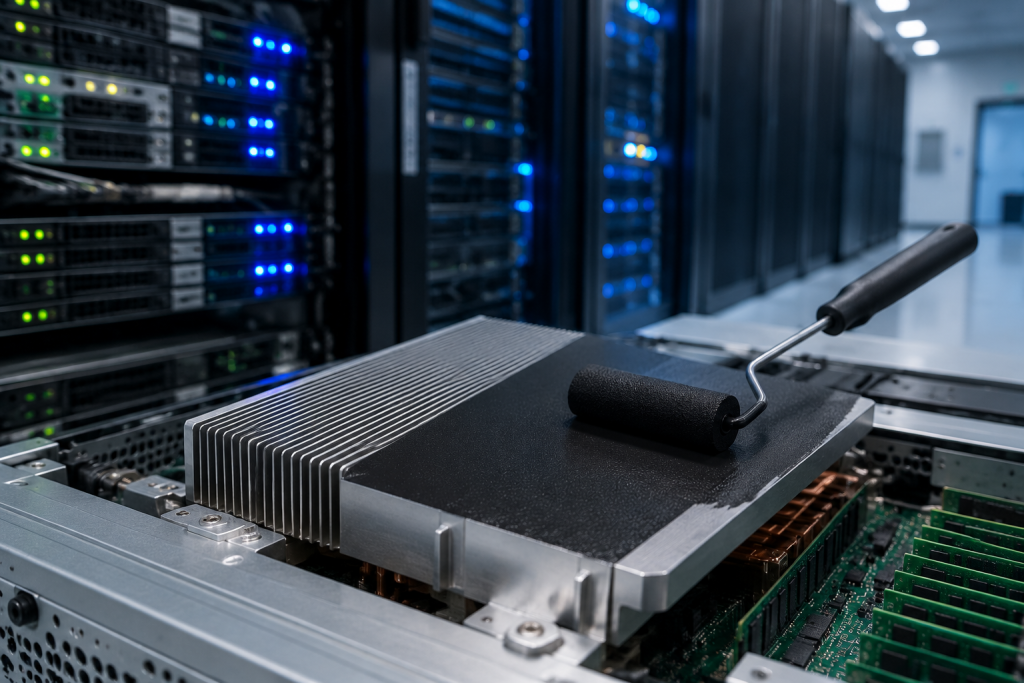
While liquid cooling, advanced heat sinks, and thermal interface materials receive considerable attention, graphene-based thermal coatings are emerging as another promising technology for improving heat transfer and thermal reliability.
By enhancing thermal conductivity at component and system levels, graphene coatings can support more efficient cooling solutions for AI servers and data center equipment.
Why Thermal Management Matters in AI Infrastructure
Modern AI processors operate with extremely high power densities.
As computational workloads increase, excessive heat can lead to:
- Reduced processing performance
- Thermal throttling
- Higher cooling energy consumption
- Component degradation
- Reduced equipment lifespan
Maintaining stable operating temperatures is therefore essential for system reliability, energy efficiency, and long-term operational performance.
The Growing Heat Challenge
Compared with traditional enterprise servers, AI computing platforms generate much higher thermal loads.
Several factors contribute to this challenge:
- High-performance GPUs and AI accelerators
- Dense server configurations
- Continuous computing workloads
- Increasing rack power density
- Large-scale deployment of AI clusters
These conditions require more efficient methods for transferring heat away from critical electronic components.
What Are Graphene Thermal Coatings?
Graphene thermal coatings are engineered coating systems containing graphene or graphene-enhanced carbon materials designed to improve heat transfer.
Depending on the application, these coatings may be applied to:
- Heat spreaders
- Heat sinks
- Metal housings
- Cooling plates
- Electronic enclosures
- Thermal interface structures
Rather than replacing existing cooling systems, graphene coatings are often used to enhance overall thermal performance.
How Graphene Improves Heat Dissipation
Graphene possesses exceptionally high intrinsic thermal conductivity.
When properly dispersed within engineered coating systems, graphene can help:
Improve Heat Spreading
Heat is distributed more evenly across surfaces, reducing localized hot spots.
Lower Thermal Resistance
Improved thermal pathways enable more efficient heat transfer between components.
Enhance Temperature Uniformity
More uniform temperatures help reduce thermal stress within electronic assemblies.
Support Lightweight Thermal Designs
Because graphene is extremely thin and lightweight, it can improve thermal performance without adding significant mass.
Potential Applications in AI Servers
Graphene thermal coatings are being explored for a variety of AI hardware components.
Heat Sinks
Enhancing heat transfer from processors into cooling structures.
Cold Plates
Supporting liquid-cooled server systems by improving thermal conduction.
Server Chassis
Helping distribute heat throughout metallic structural components.
Power Electronics
Improving thermal management for power conversion systems and voltage regulators.
Thermal Interface Components
Working alongside conventional thermal interface materials to improve overall heat transfer efficiency.
Benefits for Data Centers
Improved thermal management can deliver several operational advantages.
Higher Cooling Efficiency
More effective heat transfer reduces cooling system workload.
Improved Equipment Reliability
Lower operating temperatures may reduce thermal fatigue and extend component life.
Increased System Stability
Maintaining consistent temperatures helps support stable computing performance under demanding AI workloads.
Better Energy Utilization
Efficient heat management contributes to lower cooling energy consumption and improved data center efficiency.
Manufacturing Considerations
Achieving reliable thermal performance depends on more than graphene itself.
Industrial coating development requires careful control of:
- Graphene dispersion quality
- Coating formulation
- Film thickness
- Adhesion
- Surface uniformity
- Curing conditions
Pilot-scale coating validation is often necessary before commercial deployment.
Consistent manufacturing is essential for achieving repeatable thermal performance.
The Role of Pilot Manufacturing
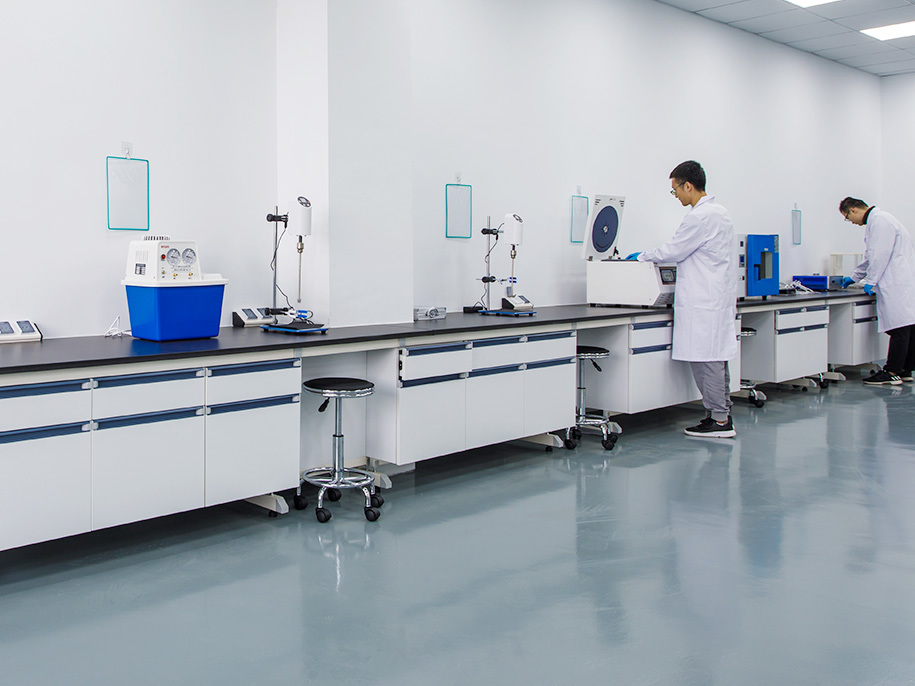
Pilot production helps bridge the gap between laboratory coating development and industrial manufacturing.
Typical objectives include:
- Optimizing coating formulations
- Validating roll-to-roll coating processes
- Evaluating drying behavior
- Verifying coating consistency
- Producing representative samples for customer qualification
Pilot validation significantly reduces scale-up risk and supports commercialization.
Challenges and Future Development
Although graphene thermal coatings offer significant potential, several technical challenges remain.
These include:
- Maintaining stable graphene dispersion
- Achieving uniform coating thickness
- Controlling production costs
- Ensuring long-term environmental durability
- Integrating coatings into existing manufacturing processes
Ongoing advances in formulation engineering, coating technology, and pilot manufacturing are expected to accelerate industrial adoption.
Future Outlook
As AI infrastructure continues to expand, demand for advanced thermal management technologies will continue to grow.
Future developments are expected to include:
Higher Performance Thermal Coatings
Supporting next-generation AI processors with even greater heat densities.
Hybrid Carbon Material Systems
Combining graphene with CNTs and other conductive fillers for multifunctional performance.
Roll-to-Roll Manufacturing
Improving scalability for high-volume thermal film production.
Sustainable Cooling Solutions
Reducing cooling energy requirements through improved heat transfer efficiency.
Graphene thermal coatings are expected to become an increasingly valuable component of advanced thermal management strategies.
The rapid growth of AI servers and hyperscale data centers is creating unprecedented demands for efficient thermal management.
Graphene thermal coatings provide an opportunity to enhance heat spreading, reduce thermal resistance, and improve system reliability without fundamentally changing existing cooling architectures.
However, successful implementation depends on more than material performance alone.
Consistent dispersion, optimized coating processes, pilot-scale validation, and scalable manufacturing are essential for transforming graphene thermal coatings from laboratory innovations into practical industrial solutions.
As AI computing continues to evolve, advanced carbon-based thermal coatings are likely to play an increasingly important role in the next generation of electronics cooling technologies.